
Why Non-DOT Employers Need a Drug Testing Policy
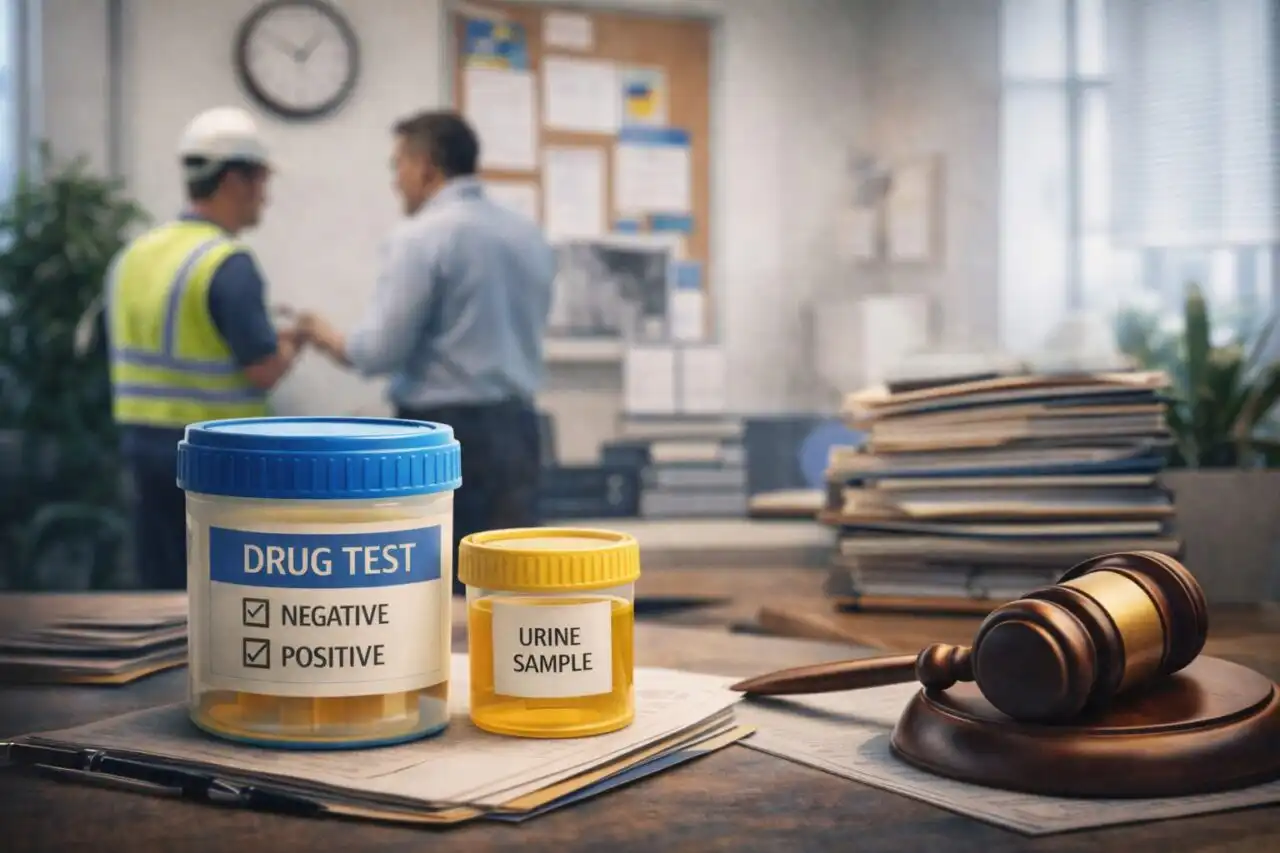
For years, compliance conversations centered around regulated transportation and DOT compliance.
Today, the greater risk is often sitting outside the DOT world.
Non-DOT employers now operate in an environment filled with evolving marijuana laws, remote work complications, inconsistent state regulations, and increasing litigation. The legal exposure for companies without a clear workplace drug testing policy has never been higher.
If you are a non-DOT employer, a written drug and alcohol testing policy is no longer a “nice to have.” It is the foundation of a defensible compliance program.
Here is why.
1. Marijuana Legalization Has Created Workplace Confusion
Employees frequently assume that marijuana legalization eliminates an employer’s right to test or discipline.
That assumption is incorrect. But confusion around workplace cannabis use is at an all-time high.
A properly written non-DOT drug testing compliance policy must clearly define:
- Your company’s position on marijuana
- Whether THC testing is conducted and under what circumstances
- Fitness-for-duty expectations
- What constitutes impairment
- Consequences for policy violations
- How state law affects, or does not affect, your workplace
Without written standards, discipline decisions appear arbitrary. When an employee challenges a termination or unemployment denial, the first question becomes simple.
Where is your policy?
If it does not exist or is vague, your defense weakens immediately.
2. State Laws Are Moving Faster Than Most Employers Realize
Unlike DOT compliance, which operates under a federal framework, non-DOT drug testing compliance is governed by a patchwork of state and local rules.
Some states:
- Restrict pre-employment marijuana testing.
- Require accommodation in certain situations.
- Prohibit adverse action without proof of impairment.
- Have specific notice and consent requirements.
A generic template downloaded years ago will not protect you.
A defensible workplace drug testing policy must be:
- State-specific.
- Legally compliant.
- Updated as legislation changes.
- Consistent with current case law.
Many HR teams believe they are compliant until a claim forces a closer look. By then, the damage is done.
3. Inconsistent Discipline Is a Lawsuit Waiting to Happen
When no written policy exists, managers rely on memory, past practice, or personal judgment.
That inconsistency creates risk in the form of:
- Discrimination claims.
- Wrongful termination suits.
- Retaliation allegations.
- Union grievances.
- Workers’ compensation disputes.
Courts and arbitrators look for predictable and consistent enforcement. A written policy removes subjectivity and establishes uniform standards across departments and locations.
Consistency is not just operationally smart. It is legally protective.
4. A Policy Defines When You Can Test and When You Cannot
Non-DOT employers frequently misunderstand their authority to test.
Your written drug testing policy must clearly authorize:
- Pre-employment testing.
- Random testing.
- Reasonable suspicion testing.
- Post-accident testing.
- Return-to-duty testing.
- Follow-up testing.
If the authority to test is not written into your policy, it may not be enforceable.
If it is not enforceable, it is not defensible.
This is one of the most common breakdowns in non-DOT drug testing compliance programs.
5. Workers’ Compensation and Unemployment Claims Depend on Documentation
When an employee files for unemployment or challenges a workers’ compensation denial, investigators and hearing officers typically request one document first.
Your drug testing policy.
An updated and professionally written policy allows you to:
- Demonstrate consistent application
- Establish intoxication as a contributing factor
- Support disciplinary decisions
- Strengthen claim denials when appropriate
Without it, leverage shifts quickly away from the employer.
In practical terms, your policy protects your company’s financial exposure.
6. Remote and Hybrid Work Introduce New Compliance Questions
As remote work expands, so do policy gaps.
Non-DOT employers must clarify:
- Whether remote employees are subject to testing
- How reasonable suspicion is identified when supervisors are not onsite
- How post-accident testing applies to remote workers
- Whether contractors or gig workers fall under policy scope
Ambiguity creates disputes.
A written policy eliminates uncertainty before it becomes a legal issue.
7. Courts Expect Predictable and Defensible Programs
When workplace disputes escalate to arbitration or litigation, employers must demonstrate that decisions were based on:
- A written and distributed policy
- Consistent testing procedures
- Proper documentation
- Professional oversight, including MRO review when appropriate
If even one of those components is missing, the employer’s credibility weakens.
In non-DOT drug testing compliance, defensibility is built long before a dispute ever arises.
Your Policy Is Your Protection
A professionally developed workplace drug testing policy is the backbone of a compliant program.
- It protects your company’s reputation.
- It reduces legal exposure.
- It strengthens your position in unemployment and workers’ comp disputes.
- It gives HR leaders confidence to act consistently.
Most importantly, it communicates something that matters more than ever.
Your workplace is a safety-sensitive environment. Impairment will not be tolerated.
At NMS Screening & Compliance, we build and maintain state-specific, defensible non-DOT drug testing compliance programs designed to keep employers audit-ready and legally protected.
If you are unsure whether your current policy truly protects you, this is the time to review it.
Because in today’s environment, compliance is not optional. It is your shield.