24/7 Emergency Drug Testing: DOT Post-Accident Response
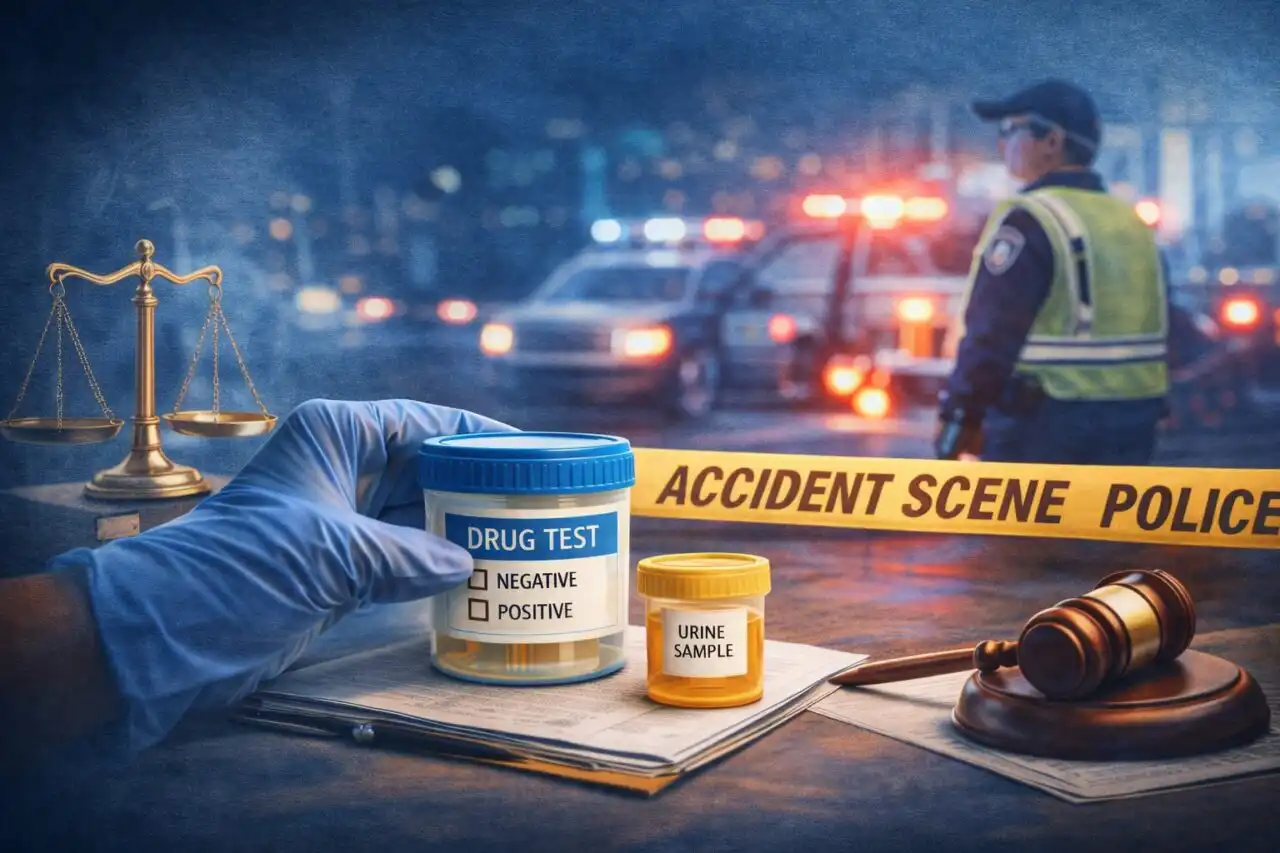
When an accident happens, the clock may start before HR even knows there has been an accident.
That creates a question every employer with a drug and alcohol testing program should be able to answer:
If a qualifying accident happened at 11:30 tonight, would your supervisor know exactly whom to call and what to do?
If the answer is no, the problem is not simply inconvenience.
For DOT-regulated employers, it can become a compliance problem.
The Clock Starts Immediately
For FMCSA-regulated employers, post-accident testing deadlines are not suggestions. Under 49 CFR § 382.303, when an accident meets the regulatory criteria requiring testing, the employer must conduct the required testing as soon as practicable.
For alcohol testing:
- Within 2 hours: If the required alcohol test has not been administered, the employer must prepare and maintain a record explaining why it was not promptly administered.
- At 8 hours: The employer must stop attempting the alcohol test and maintain the required record explaining the delay.
For controlled-substances testing:
- At 32 hours: If the required test has not been administered, the employer must stop attempting the test and maintain a record explaining why it was not promptly administered.
Those records must be provided to FMCSA upon request.
- Alcohol — 2 Hours
- Test not completed? Document why it was not promptly administered.
- Alcohol — 8 Hours
- Stop attempts to administer the test and maintain the required documentation.
- Controlled Substances — 32 Hours
- Stop attempts to administer the test and maintain the required documentation.
Source: 49 CFR § 382.303(d)(1)–(2)
But there is another requirement employers can easily overlook.
Under 49 CFR § 382.209, a driver required to undergo post-accident alcohol testing must not consume alcohol for eight hours following the accident or until the test is completed, whichever occurs first.
That means your post-accident procedure needs to address more than finding a testing facility.
- The driver needs instructions.
- The supervisor needs instructions.
- The person responsible for compliance needs to know whether DOT testing is actually required.
- And somebody needs to get the collection moving.
Now Consider What Happens at 11:30 P.M.
- Your driver has an accident.
- The regular clinic closed at 5:00.
- The supervisor starts searching online for somewhere to send the employee.
- HR is asleep.
- Nobody is certain whether the accident meets DOT post-accident testing criteria.
- Another hour passes.
- Then another.
That is the real problem with relying on a post-accident testing process that only works during normal business hours. Every minute spent figuring out what to do is time you cannot get back.
Accident Happening Right Now?
Do not start searching for a clinic after the clock has already started.
NMS Screening & Compliance provides 24/7 emergency drug and alcohol testing collections nationwide. Call (800) 269-0502 for immediate assistance.
The Bigger Problem Is Often the Process
Most employers do not intentionally miss a required post-accident test. The breakdown usually happens somewhere in the process.
Ask yourself:
- Who decides whether the accident triggers DOT testing?
- Does the supervisor know whom to notify after hours?
- Does your procedure distinguish between DOT and non-DOT testing?
- Who contacts the collection provider?
- What happens on weekends and holidays?
- What happens at a remote job site?
- What instructions are given to the driver?
- Who documents the reason if testing is delayed?
If several people inside your company would give different answers, you may have a compliance gap you do not know about yet. And an accident is a very expensive time to discover it.
24/7 Response Removes the Search From the Emergency
The value of a 24/7 collection program is not simply that someone answers the telephone at night. It is that your team does not have to invent a response while an incident is unfolding.
With an established emergency collection process:
- The supervisor knows whom to call.
- The request can be documented.
- A qualified collector can be located and dispatched.
- The appropriate collection process can begin.
- And the employer can focus on managing the accident instead of searching for a testing solution.
Consider the difference:
Without a plan
Accident → phone calls → clinic search → confusion → delay → documentation problem.
With a plan
Accident → one call → coordinated response → collection → documentation.
Which process would you rather explain after a serious accident?
Documentation Matters as Much as Speed
Fast testing alone is not enough. An effective post-accident program must also produce defensible documentation. That includes the collection process, chain of custody, timing, and the employer’s response. When a required FMCSA test cannot be completed within the regulatory timeframe, the employer has specific documentation responsibilities.
That raises another important question:
If FMCSA asked six months from now why a required test was delayed, could you reconstruct exactly what happened?
A properly designed emergency-response process helps create that record while events are happening, rather than trying to reconstruct it later.
DOT and Non-DOT Employers Face Different Rules
The FMCSA deadlines above apply to drivers subject to FMCSA regulations when the accident meets the triggering requirements of § 382.303. Not every workplace accident requires an FMCSA post-accident test.
Other DOT agencies have their own requirements.
Non-DOT employers may be governed by state law and their written workplace testing policies.
That is why simply telling every supervisor to “send the employee for a drug test after an accident” is not an adequate compliance procedure.
Your company needs to know:
- When should we test?
- Under which authority are we testing?
- Which procedure applies?
- Who makes that determination?
- Who gets the collection done?
Emergencies Do Not Follow Business Hours
Accidents happen overnight. On weekends. On holidays. At remote locations. And when the person who normally handles drug testing is unavailable.
The question is not whether your normal collection provider works well at 2:00 Tuesday afternoon. The question is:
What happens at 2:00 Sunday morning?
If the answer involves searching for an open clinic, calling multiple people, or hoping someone knows what to do, your emergency procedure may already have a weakness.
The Test of a Good Post-Accident Program
Imagine a qualifying accident happens tonight.
Could your supervisor answer all five questions immediately?
- Does this accident require testing?
- Which test is required?
- How quickly must it happen?
- Who do I call?
- What must I document?
If not, that is the gap to fix before the accident happens.
How NMS Helps
NMS Screening & Compliance provides employers with nationwide drug and alcohol testing support, including 24/7 emergency on-site collections.
Instead of asking supervisors to find a solution after an accident, employers can establish the process in advance.
One call starts the response.
Need Emergency Testing Now?
Call NMS 24/7 at (800) 269-0502.
We coordinate emergency drug and alcohol testing collections nationwide.
Would Your Current Program Pass the Test?
If you are not sure whether your company has gaps in its drug and alcohol testing program, start with the NMS 60-Second Risk Assessment.
Want Us to Review Your Current Policy?
Contact Maria Delisle, VP of Business Development / Sales & Training, for a free policy review.
[email protected]
Direct: (561) 560-8131
Toll-Free: (800) 269-0502 ext. 101
Do not wait for an accident to find out that your post-accident procedure does not work.
This material is provided for educational and informational purposes only and is not legal advice.