Marijuana Is Legal… but Your Employees Still Can’t Be High at Work
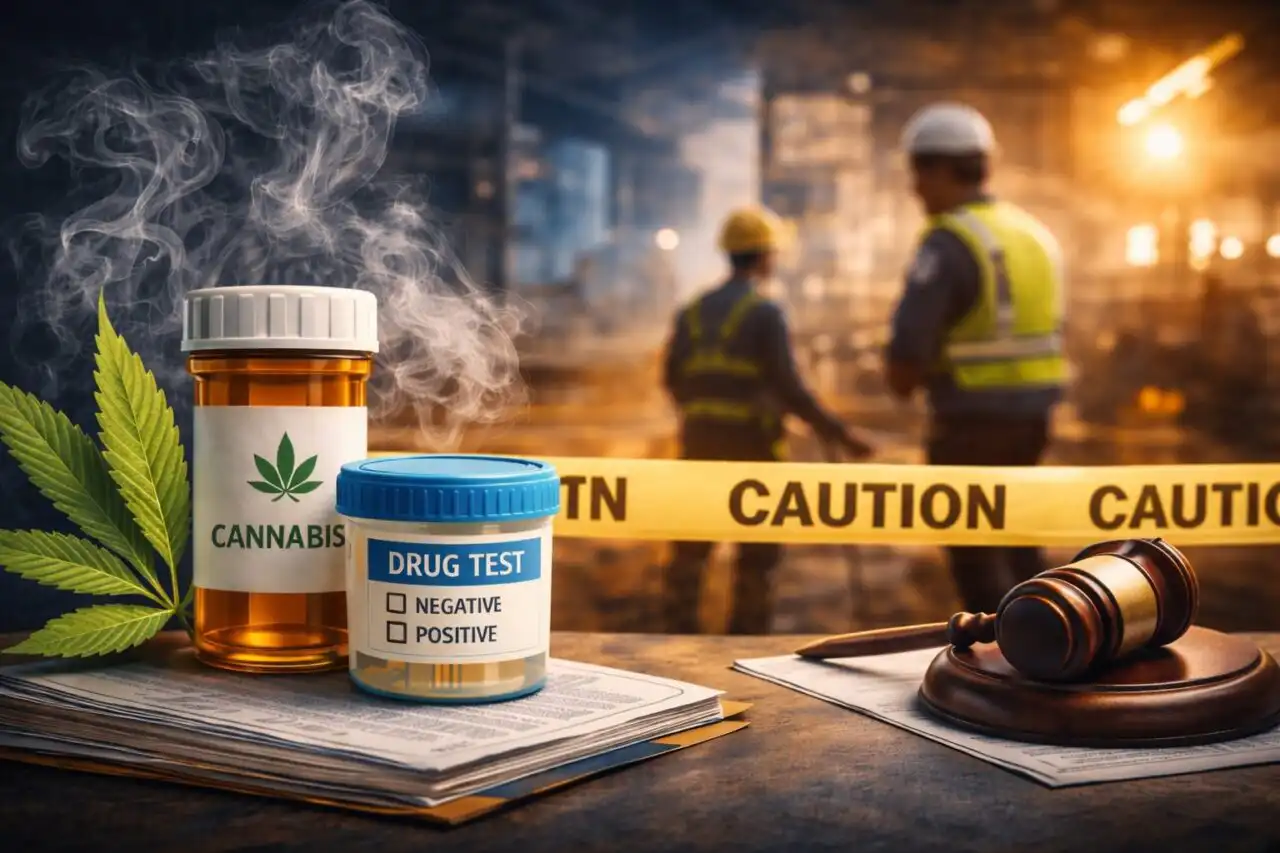
Marijuana laws continue to evolve across the country. Unfortunately, workplace confusion is evolving right along with them.
Many employees now assume legalization means unrestricted use, including protection from workplace consequences. For employers, that misunderstanding creates risk, inconsistent enforcement, and growing pressure on HR and safety teams.
Here is the reality every employer must understand and communicate clearly:
- Marijuana may be legal in many states.
- Impairment at work is not.
- No state law requires an employer to tolerate on-the-job impairment.
- No state requires employers to sacrifice safety.
- And no state prevents you from enforcing a well-written, defensible drug and alcohol testing policy.
Below is what businesses must know to remain compliant, consistent, and legally protected.
1. Legalization Does Not Equal Workplace Permission
Even in states where recreational or medical marijuana is fully legal, employers retain the right to maintain a drug-free workplace.
Employers may still prohibit:
- On-duty marijuana use
- Being impaired or under the influence at work
- Possession of marijuana on company property
- Use during breaks or lunches
- Pre-shift use in safety-sensitive roles
Legalization applies to personal, off-duty conduct. It does not override workplace standards or safety obligations.
2. Marijuana Impairment Is a Safety and Liability Risk
Cannabis affects:
- Reaction time.
- Decision-making.
- Memory.
- Coordination.
- Situational awareness.
- Equipment and vehicle operation.
In safety-sensitive environments, even minor impairment can result in serious injury, property damage, or fatal accidents.
If an incident occurs and the employer fails to act on visible signs of impairment, the exposure increases dramatically. Potential consequences include:
- Negligence claims
- Increased workers’ compensation liability
- Third-party injury lawsuits
- Insurance disputes
- Claims of failure to maintain a safe workplace
Employers are expected to act when impairment is suspected. Documentation and consistency are critical.
3. “Legal” Does Not Mean “Allowed at Work”
One of the most common statements HR hears today:
“You can’t discipline me. Marijuana is legal.”
Without a clear, state-specific workplace drug-testing policy, defending disciplinary decisions becomes difficult.
A compliant policy must address:
- Marijuana use rules.
- Fitness-for-duty standards.
- When testing occurs.
- Consequences for violations.
- Medical marijuana considerations.
- Stricter standards for safety-sensitive roles.
If expectations are not clearly written and distributed, enforcement becomes inconsistent. Inconsistent enforcement creates legal vulnerability.
4. Medical Marijuana Does Not Guarantee Workplace Immunity
Most states permit employers to enforce safety and fitness-for-duty standards even for medical marijuana cardholders.
Key principles employers should understand:
- You are not required to allow impairment at work.
- You are not required to place impaired employees in safety-sensitive positions.
- You may enforce consistent safety standards across the workforce.
However, some states restrict adverse action based solely on a positive THC result without proof of impairment. This is where state-specific compliance becomes essential.
A generic policy will not protect you.
5. Marijuana Testing Is Still Lawful, When Done Properly
Employers may test for marijuana under defined circumstances, including:
- Pre-employment.
- Post-accident.
- Reasonable suspicion.
- Random testing where permitted.
- Return-to-duty and follow-up.
Each testing category must be:
- Clearly authorized in writing.
- Applied consistently.
- Properly documented.
- Conducted under professional oversight.
Testing is not about punishment. It is about protecting your workforce, reducing liability, and maintaining operational safety.
6. Supervisor Training Is Now Critical
Because impairment, not legalization, is the core issue, supervisors must be trained to identify and document reasonable suspicion indicators such as:
- Slurred or slowed speech.
- Odor of marijuana.
- Red or glassy eyes.
- Poor coordination.
- Behavioral changes.
- Inattention or confusion.
- Unsafe decision-making.
Proper observation and documentation often determine whether an employer’s action stands up in a dispute.
Without training, enforcement becomes subjective. Subjectivity invites claims.
7. Your Written Policy Is Your Strongest Defense
Marijuana laws vary widely by state and continue to change.
A defensible workplace drug testing policy must reflect:
- State-specific marijuana regulations.
- Testing restrictions and allowances.
- Definitions of impairment.
- Safety-sensitive role requirements.
- Medical marijuana accommodation rules.
- The employer’s right to maintain a safe workplace.
A professionally structured policy creates predictability. Predictability creates defensibility.
8. You Can Keep Your Workplace Safe, Even as Laws Change
Despite evolving state legalization, one principle remains unchanged:
Employees must be sober, alert, and fit for duty while working.
- Marijuana may be legal in many states.
- Impairment at work is not.
That standard protects employees, protects the public, and protects your company.
NMS Screening & Compliance helps employers develop, update, and enforce state-specific drug and alcohol testing policies that align with changing marijuana laws while keeping companies compliant and legally protected.
If your policy has not been reviewed in the last 12 to 18 months, there is a strong chance it no longer reflects current law — and that means exposure.
- Compliance is not optional.
- Protection starts with policy.